-
Your shopping cart is empty!


Your shopping cart is empty!
A leave-in conditioner is designed to remain on the hair after application, unlike a conditioner or mask that must be rinsed out. Depending on the formula, it can help with the feel and manageability of the lengths. Whether you need one depends on what your current routine leaves unfinished.
If your hair already feels comfortable and easy to style, an additional product is not automatically necessary. If you regularly want a separate conditioning step after washing, it may be worth considering.
Before choosing a leave-in, describe the task you want it to perform. Is the hair difficult to manage after towel drying? Do the ends feel different from the roots? Are you looking for a product that remains on the lengths between washing and styling?
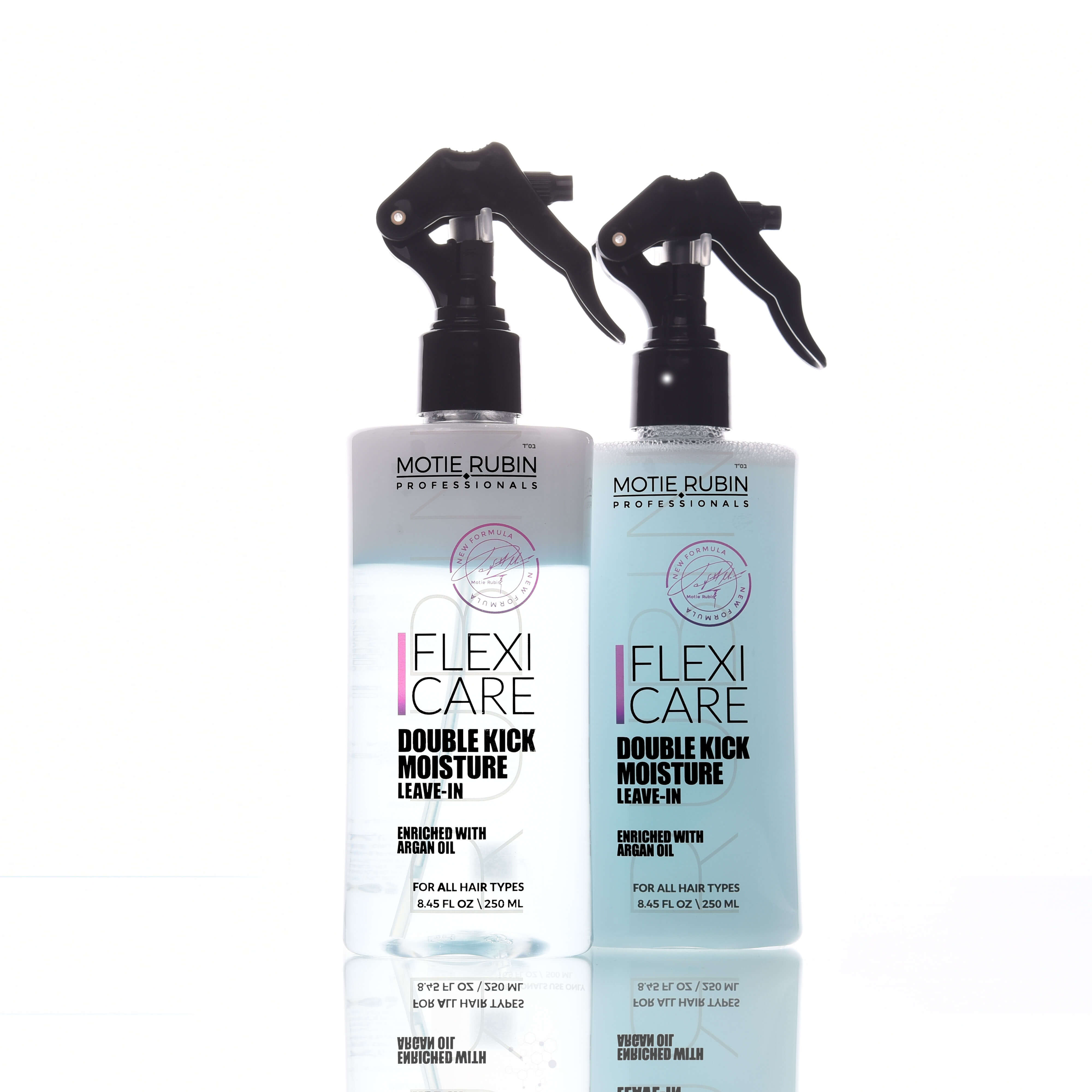
Flexi Care Double Kick Moisture Leave In is the leave-in conditioning option featured here. Its place in a routine is separate from shampoo and rinse-out care.
Choose it by that role and by its current instructions, rather than assuming it can replace every other styling or conditioning product.
A product's instructions matter more than the convenience of leaving it on. A rinse-out mask should be rinsed away as directed; do not convert it into a leave-in by applying less or mixing it with water.
The American Academy of Dermatology distinguishes these product types and recommends choosing a leave-in suited to the hair's needs. It also notes that heat protection is a feature of some leave-ins, not a feature to assume for all of them.
This makes a useful shopping checklist: intended use, application instructions, the type of hair the product addresses and any specifically stated styling protection.
Keep the first comparison simple. Use your usual compatible wash routine, then follow the leave-in's label instructions. Observe how your hair feels once dry and how it behaves in your normal style.
Do not add a new oil and curl cream at the same time if you want to understand the leave-in's contribution. A more complicated routine makes it harder to identify what helped or what felt excessive.
Record the application amount and the sections you treated. You may find that the lengths need attention while the root area does not need another product.
A leave-in, an oil treatment and a curl cream can all appear in hair-care routines, but they are selected for different tasks. Start with your need rather than trying to collect one product from every category.
For example, someone concentrating on curl styling may begin with a curl cream, while someone looking for a separate leave-on conditioning step may consider a leave-in. The same person may use both, but that should be a deliberate choice.
If the finish feels heavy, reduce unnecessary layers before assuming your hair needs a stronger cleanser at every wash.
Use a product labeled as leave-in according to its directions. It is designed for a different routine from a product that explicitly requires rinsing.
Not everyone does. Assess the result of your rinse-out routine first, then decide whether an extra step has a clear purpose.
No. Check for a specific heat-protection claim and its directions on the current packaging.
Choose a suitable formula and amount rather than ruling the category in or out by hair thickness alone. Assess whether the finished style feels comfortable rather than coated.
Do not repurpose a rinse-out product this way. Use a product formulated and labeled for leave-in application.
Explore your leave-on conditioning option: View Flexi Care Double Kick Moisture Leave In.