-
Your shopping cart is empty!


Your shopping cart is empty!
After a keratin or smoothing appointment, choose your shampoo around the specific treatment you received, your stylist's aftercare instructions and the needs of your scalp. A shampoo described as sulfate-free may be an appropriate option, but the label alone does not tell you whether it suits every treatment or every head of hair.
The aim is a routine you can repeat comfortably: cleanse when needed, condition the lengths and keep the instructions for your salon service close at hand.
“Keratin treatment,” “nanoplastia” and “hair smoothing” are used for different salon systems. Avoid borrowing washing instructions from a friend whose service may have used another product.
Before leaving the salon, ask for the treatment name, when you may first wash your hair and whether any product types should be avoided. Keep those answers in a note on your phone. They are more useful than a universal rule about waiting a fixed number of days.
Flexi Care SLS Free Shampoo is listed in the Motie Rubin range for chemically treated hair. It is an option to discuss with your stylist when choosing ongoing cleansing after a smoothing service.
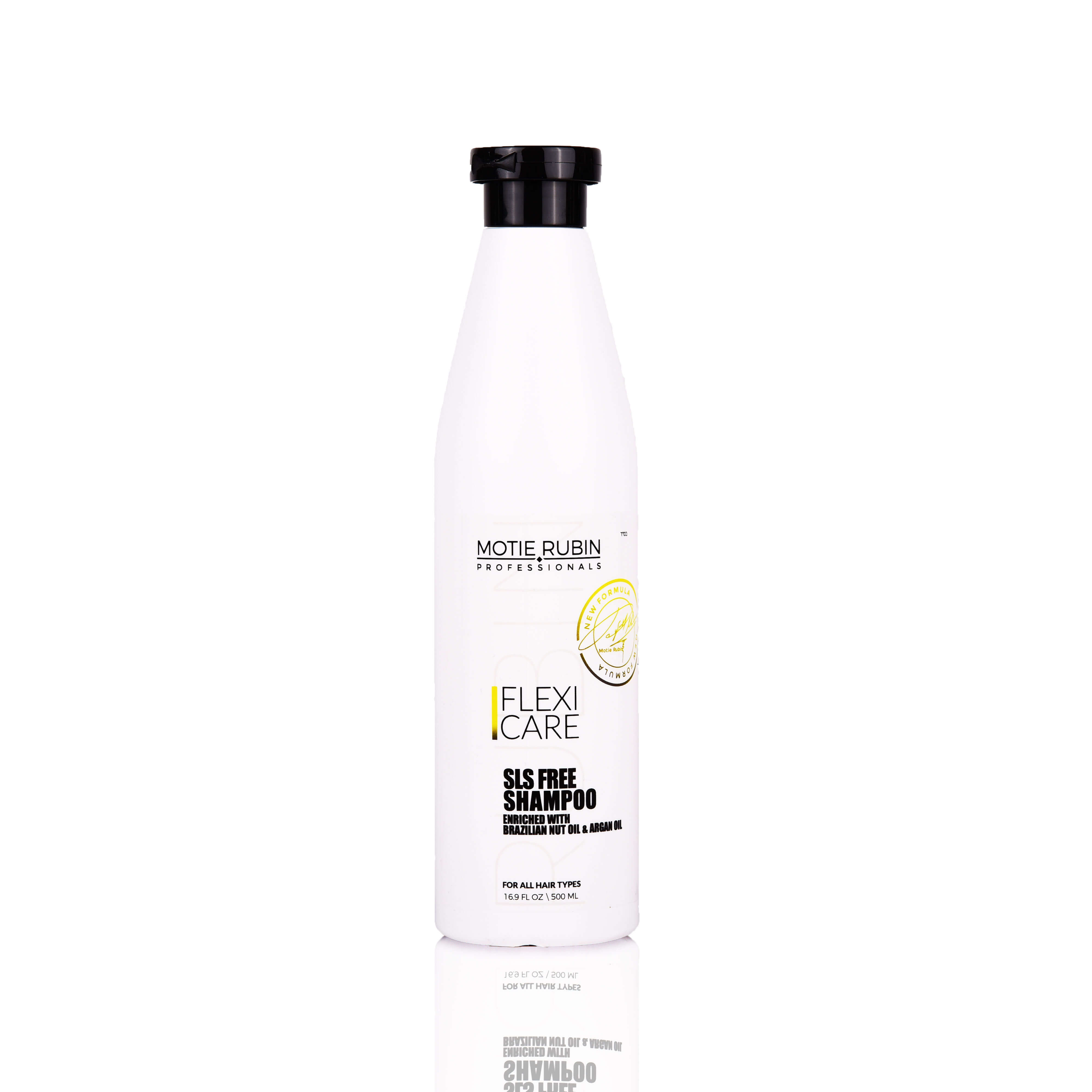
When comparing shampoos, check the product's intended use and directions, not just a prominent “free-from” claim. A clarifying preparation shampoo and an everyday aftercare shampoo can have different roles, even when both are professional products.
SLS-free is also a specific claim, rather than a complete description of a formula. If your treatment instructions require a particular type of shampoo, confirm that requirement against the complete product label instead of guessing from the name.
You do not need to replace every product you own on the day of your appointment. Start by identifying which products already fit the aftercare guidance and which need a different role in your routine.
Your scalp and ends do not necessarily need the same attention. An oily root area does not mean the lengths need more shampoo, and dry ends do not automatically call for a heavier product at the scalp.
Choose a washing schedule that fits scalp comfort and daily activity. For conditioning, pay attention to the sections that feel difficult to comb or rough after rinsing. Keep the routine consistent long enough to understand how each step feels.
For the conditioning stage, Flexi Care Mask With Brazilian Nut Oil provides a separate rinse-out option. Use it according to its current directions and your stylist's advice, rather than assuming every wash needs several conditioning products.
Useful questions are simple: Does the scalp feel clean? Are the ends easier to manage? Does the hair still feel light enough for your preferred style?
If the roots feel coated while the ends remain dry, review where products are applied before buying another formula. If the hair feels unusually fragile after a service, return to your stylist for an assessment before adding another chemical treatment.
Keep a short record of what you used for the first few washes. Changing shampoo, mask and styling products simultaneously makes it harder to know which change helped.
No. Follow the aftercare instructions for the actual system used. A product suitable after one salon service is not automatically suitable after every other service.
The answer depends on the treatment. Ask your stylist for the correct first-wash instructions rather than following a blanket waiting period from social media.
An oil treatment and a rinse-out mask occupy different places in a routine. Choose by the task you want the product to perform, rather than treating their names as interchangeable.
Tell your stylist about both services. Your routine may need to address color maintenance and the feel of the lengths as well as smoothing aftercare.
Choose your cleansing step: Explore Flexi Care SLS Free Shampoo and check its directions alongside your salon aftercare plan.